
Patch Tuesday (Microsoft)
Menu: Exposure → Patch Tuesday Patch Tuesday is a patch-cycle view focused on Microsoft Patch Tuesday releases. It helps you triage CVEs for a given patch cycle and prioritize what to patch first using:- priority bands (P0–P3)
- KEV (Known Exploited Vulnerabilities)
- CVSS severity
- EPSS (exploit likelihood)
- affected product family / product
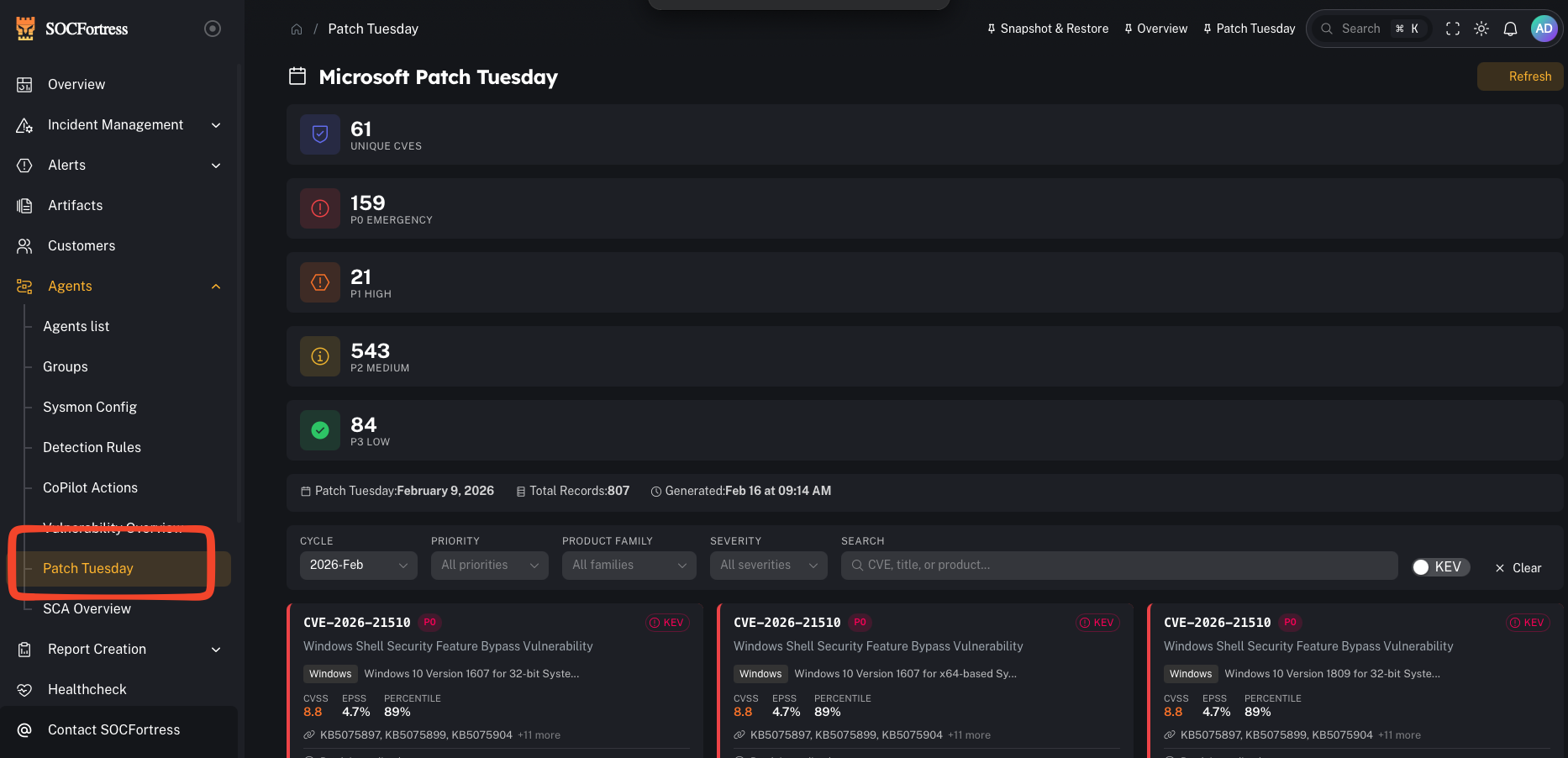
What you’re looking at
Cycle summary
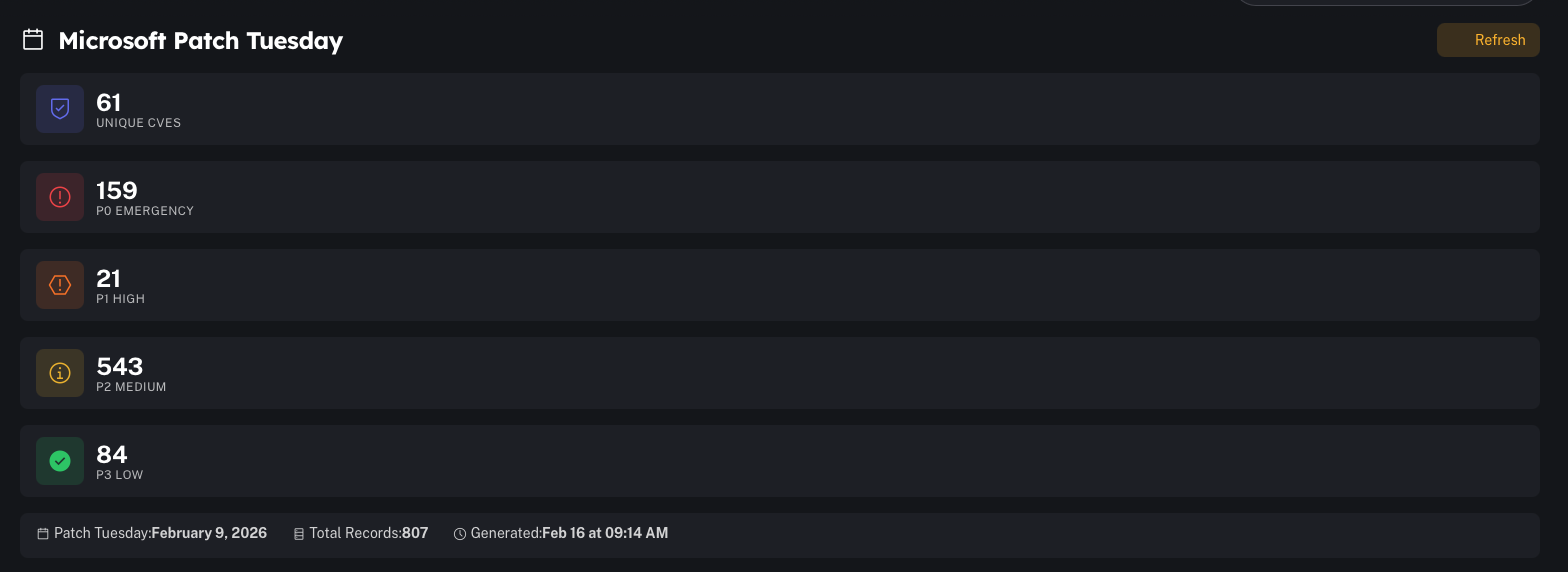
- count of unique CVEs
- counts by priority (P0 Emergency, P1 High, P2 Medium, P3 Low)
- the patch cycle date and generation timestamp
- a fast “how big is this month?” snapshot
- tracking backlog reduction over the patch window
Filters
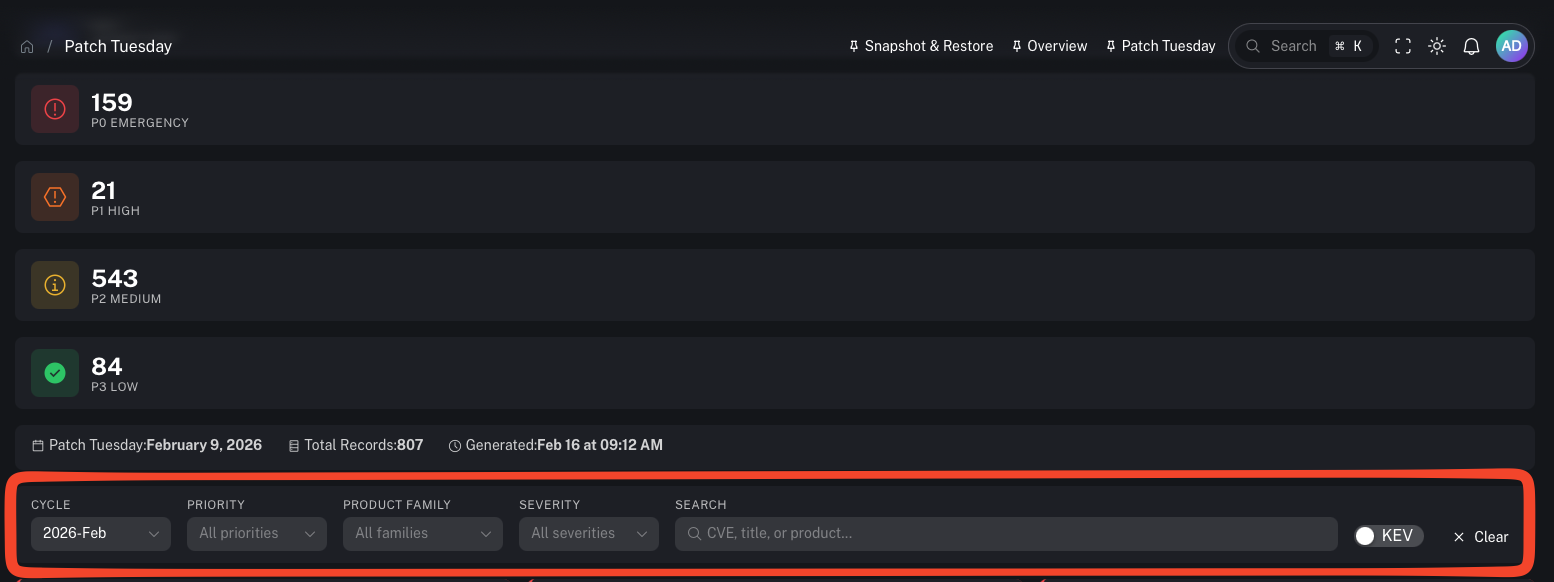
- Cycle (e.g.,
2026-Feb) - Priority
- Product family
- Severity
- Search (CVE, title, product)
KEV toggle
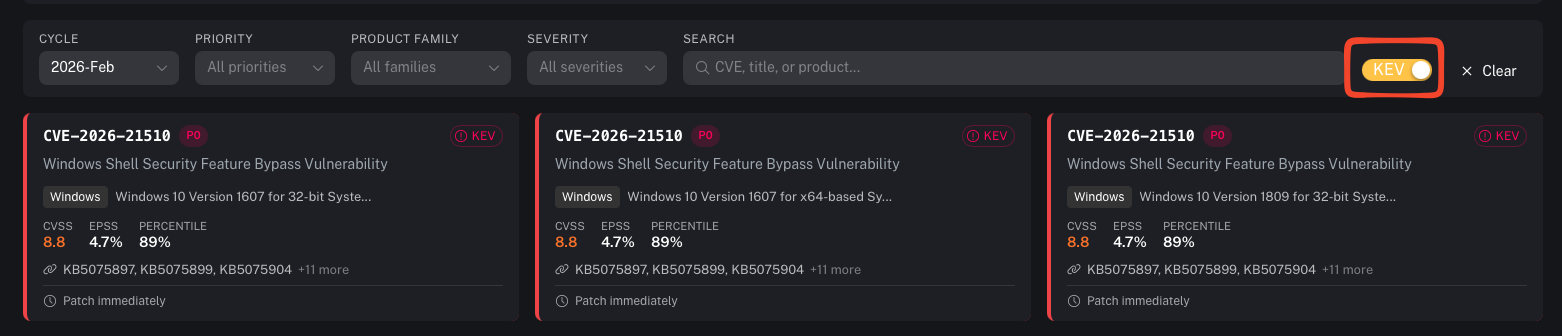
CVE cards
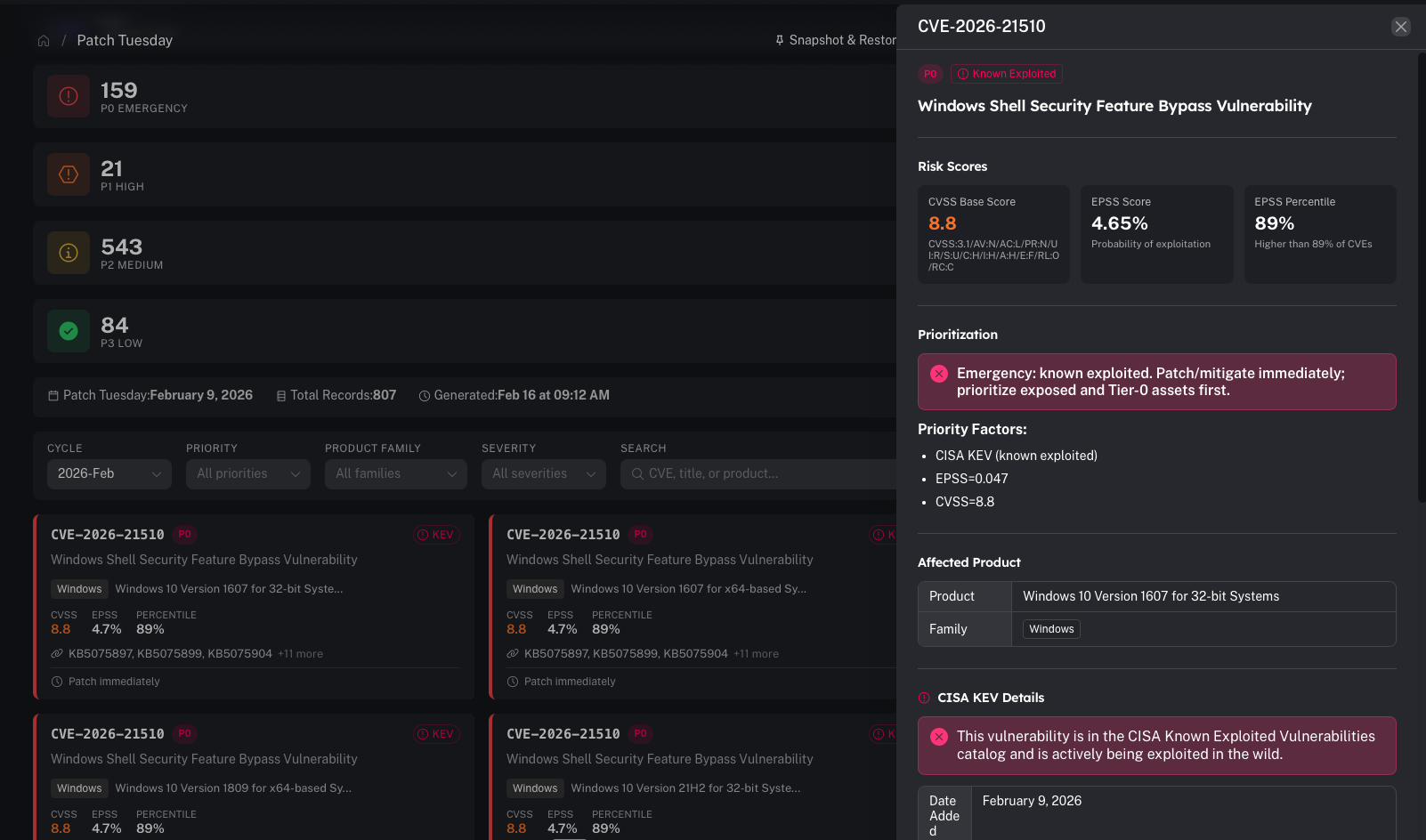
- CVE ID + title
- priority (P0–P3)
- KEV indicator (when applicable)
- product family and affected products
- CVSS
- EPSS + percentile
- associated KBs / updates (when available)
How to use this page (operator workflow)
A practical monthly flow:-
Start with KEV + P0
- Turn on KEV
- Filter to P0 (Emergency)
- Patch these first (or implement compensating controls immediately)
-
Use EPSS to prioritize within a priority band
- When you have many P1/P2 items, sort mentally by EPSS (higher likelihood first)
-
Group work by product family
- Cluster Windows Server vs Workstations vs Office/Edge/etc.
-
Coordinate by customer / environment
- In multi-tenant stacks, drive patch work per tenant and track completion
-
Validate outcome
- Confirm patch deployment via your patch tooling
- Re-check vulnerability posture in CoPilot after inventory refresh
What P0–P3 means (recommended interpretation)
Use the priority bands as an urgency rubric:- P0 (Emergency): patch immediately (especially if KEV/high EPSS)
- P1 (High): patch in the first wave of the cycle
- P2 (Medium): patch in the standard window
- P3 (Low): patch as capacity allows
- asset criticality
- exposure (internet-facing vs internal)
- compensating controls (EDR, network controls, app allowlisting)
Prerequisites
- Patch Tuesday feed/data source is enabled and up-to-date
- Vulnerability data ingestion is working (for EPSS/CVSS enrichment where applicable)
Gotchas
- Don’t treat CVSS as a patch order by itself—use KEV + EPSS + exposure + asset criticality.
- Patch Tuesday prioritization is about urgency, not just severity.
- Some environments require maintenance windows—use compensating controls when you can’t patch immediately.