
- validate that telemetry is flowing end-to-end
- verify your Wazuh detection rules are triggering as expected
- identify blind spots and tuning opportunities before a real attacker shows up
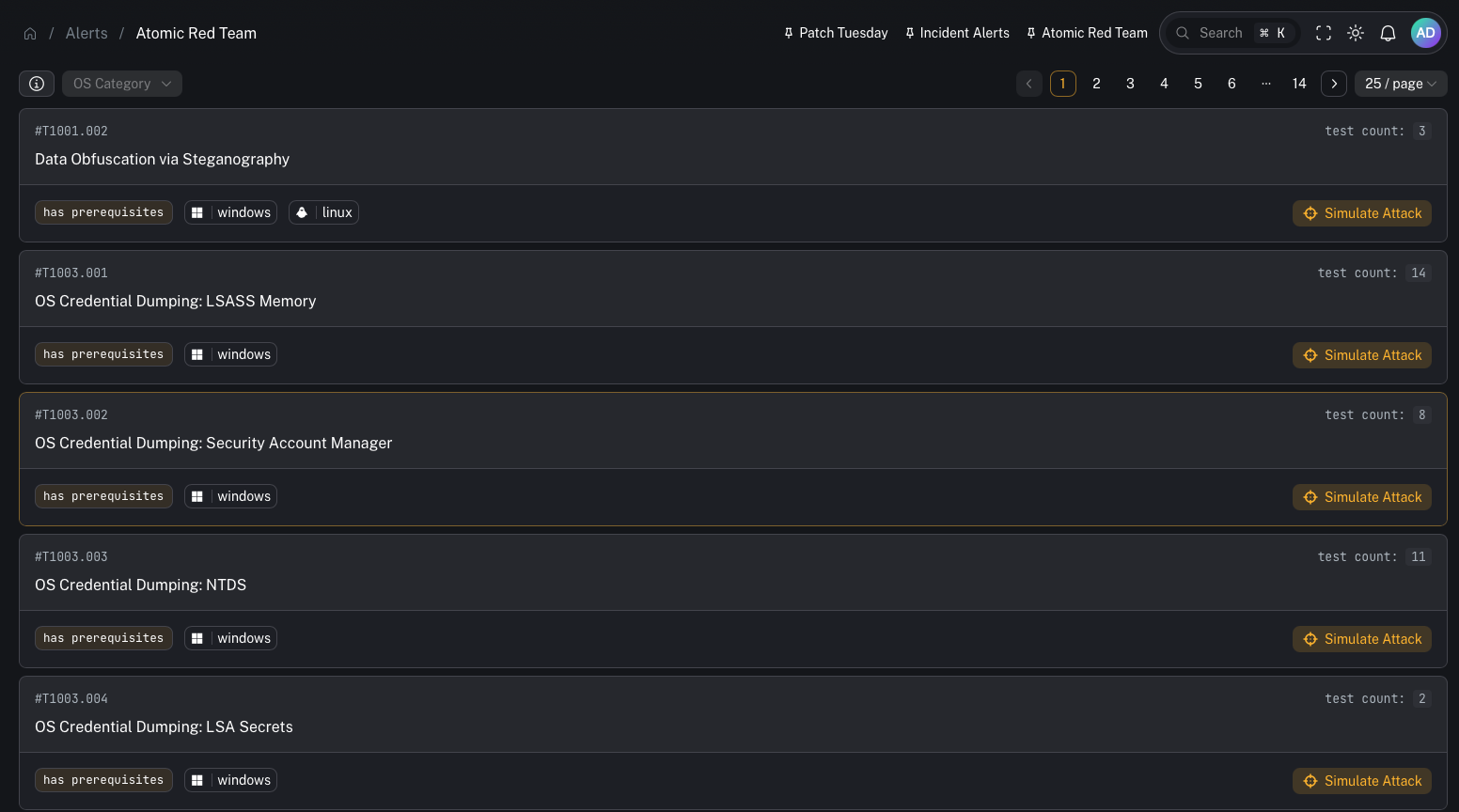
What it is
Atomic Red Team is a library of small, self-contained tests mapped to the MITRE ATT&CK framework. Regularly running these tests helps:- prevent detection drift
- validate new rules and changes
- confirm the “alerting pipeline” still works after upgrades
Why this is a power feature
Detection simulation isn’t required for initial SIEM bring-up, but it’s one of the best ways to build confidence in your detections. It’s especially valuable when:- you just deployed new Wazuh rules
- you changed Sysmon collection or agent group configs
- you’re onboarding a new customer and need to prove coverage
How it works (high level)
The workflow shown in the videos:- Install Atomic Red Team on an endpoint (Windows or Linux)
- Use a Velociraptor artifact to run a chosen atomic test remotely
- Confirm events are collected and shipped (agent → manager/indexer → Graylog/CoPilot)
- Validate:
- the expected alert fired
- the alert arrived in the right place (SIEM views and/or Incident Management)
Operator workflow (practical)
- Choose a technique/test you want to validate (start with something safe)
- Run it on a dedicated test endpoint (recommended)
- Watch for:
- Wazuh alert firing
- the event appearing in SIEM search
- the alert being routed into Incident Management (if that’s part of your pipeline)
- If it didn’t fire:
- validate telemetry collection (Sysmon/auditd)
- validate rule logic and mapping
- validate routing/streams/event definitions
Setup checklist
1) Use a safe test target
- Prefer a lab endpoint (not production)
- Document which tests you run and when
2) Install Atomic Red Team
The videos demonstrate installing Atomic Red Team so the test library exists locally on the endpoint.3) Import Velociraptor artifacts to run tests remotely
A key improvement is using Velociraptor artifacts to run tests without manually SSH/RDP’ing into hosts. Canonical repo for the Atomic Red Team Velociraptor artifacts: The videos reference:- a Windows Atomic test execution artifact
- a Linux attack simulation artifact
4) Validate detection + routing
Use CoPilot to confirm the end-to-end path:- detections trigger in Wazuh
- events are searchable in your datastore
- alerts show up where you expect (SIEM views vs Incident Management)
Where to find it
Gotchas
- Don’t run aggressive tests on production systems.
- Some tests can create artifacts (scheduled tasks, registry changes, etc.). Understand cleanup behavior before running.
- A “failed” test is still useful: it often reveals missing telemetry, broken routing, or overly strict rule logic.
Related repositories
- Velociraptor Atomic Red artifacts:
Video context
- Windows-focused validation workflow:
- Linux-focused validation workflow: